
Weeks 1–2
Pain
Get the guarding to let go.
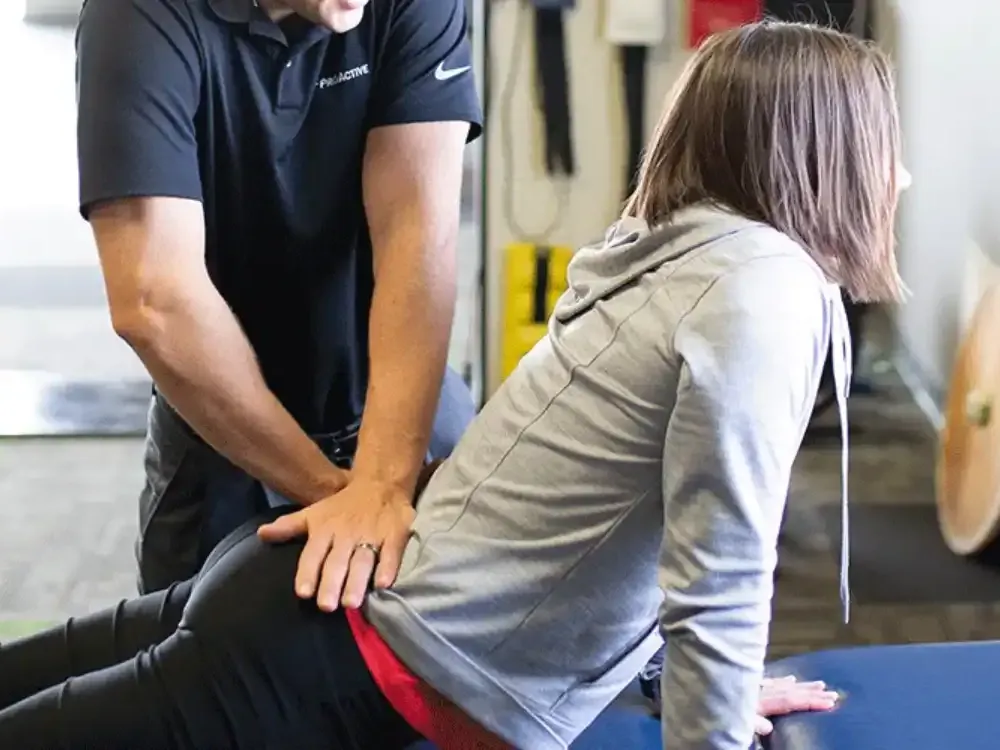
Gentle hands-on work on the neck and upper back calms the clenched muscles and the irritated joints, starting your first visit. Nothing aggressive, nothing that picks a fight with a fresh injury.
What We Treat
The wreck was two weeks ago. Your neck never got the message. You do not have to wait on an adjuster to be seen: start with an evaluation that looks for the cause, one-on-one with a licensed physical therapist, and a plan that has an end.
Sound Familiar?
Two or more? Keep reading.
Why It Happens
In a collision your head keeps moving after your torso stops. That whip strains the small facet joints and ligaments of the neck, and the deep neck muscles that normally hold your head steady switch off. The bigger surface muscles take over and stay clenched. Adrenaline hides all of it for a day or two, which is why so many people feel worse on Wednesday than they did at the scene. The same thing happens further down: mid back, low back, shoulder, jaw, and sometimes the inner ear, which is why dizziness shows up with the headaches.
The ER did the right job. It ruled out a fracture and a bleed, then sent you home with a muscle relaxer and a rest recommendation. What nobody did was retrain the deep stabilizers, restore the motion the guarding took away, or check whether the neck is what is driving your headaches. So the pain settles in and becomes your new normal. It takes an evaluation that looks for the cause to separate a stiff joint from an irritated nerve from a jaw that took the airbag.
The Honest Truth
Nobody regrets starting too early.
How We Fix It
Every plan has an endpoint. Here’s what the four phases look like after a car accident.
Weeks 1–2
Pain
Gentle hands-on work on the neck and upper back calms the clenched muscles and the irritated joints, starting your first visit. Nothing aggressive, nothing that picks a fight with a fresh injury.
Weeks 2–6
Prime
Joint mobilization and dosed mobility work restore the turn and the tilt you lost. The goal is concrete: check your blind spot with your neck, not with your steering wheel.
Weeks 6–10
Perform
The deep neck flexors and the muscles between your shoulder blades get retrained to hold your head up, so the big surface muscles can finally stop doing a job that is not theirs.
Weeks 10+
Prevent
Long drives, desk hours, the school run, tested under real conditions before we call it done. You leave with the two or three things that keep the headaches from creeping back.
Questions, Answered
No. Louisiana lets you see a licensed physical therapist without a physician referral, so you can be evaluated now. We accept auto accident claims, and we run a benefits check before your first visit so you know what you are walking into. What we will not do is play lawyer. When a question belongs to your attorney or your adjuster, we will say so plainly.
We accept auto accident claims, and we also accept Medicare, Medicaid, Blue Cross Blue Shield, Aetna, Cigna, Humana, UnitedHealthcare, TRICARE, TriWest and Peoples Health. The benefits check happens before your first visit and it happens before your first visit, not after it. If you would rather keep the claim out of it and pay yourself, ask us for a Good Faith Estimate.
Adrenaline is a very good painkiller, and it wears off. Whiplash stiffness and pain often turn up a day or two after the impact, and the headaches later than that. Feeling fine at the scene tells you what did not happen to you. It does not tell you what did. An evaluation answers that in one visit.
Usually not first. The emergency room already ruled out the dangerous things. A strained facet joint, a sprained ligament or a deep neck muscle that quit firing does not show up on a scan, but it does show up in a hands-on exam. If imaging turns out to be genuinely necessary, we will help you get it. You do not have to wait on a scan to start feeling better.
You choose. Where you do your rehab is your call, not the other driver’s insurer’s. If your claim has requirements attached to it, the benefits check is where we find that out and tell you. What matters more is what happens in the room: one-on-one with a licensed physical therapist, every visit.
Book Your Visit
Request a time and a real person calls you back. No phone tree. No ‘someone will reach out.’ Just a plan.
4.9 · 233+ Google reviews
A real person calls you back
Step 1 of 5
That’s the hard part done. We’ll call during business hours to lock in your time.
Visit Us