
Weeks 1–2
Pain
Take the risk out of right now.
First we deal with what is making you unsteady today: a painful hip or knee, stiff ankles, the wrong shoes, a cane set at the wrong height. If dizziness is part of it, vestibular therapy gets folded in.
What We Treat
You have started planning your day around handrails, and keeping one hand free just in case. Balance is trainable. It starts with an evaluation that looks for the cause, one-on-one with a licensed physical therapist, and a plan with an endpoint.
Sound Familiar?
Two or more? Keep reading.
Why It Happens
Standing up is a group project. Your inner ear reports which way is down. Your eyes report where the room is. The sensors in your feet, ankles and hips report what the ground is doing. Your brain compares all three, then your hips and ankles make the correction, usually before you notice. Take away one input and the margin gets thin. Neuropathy dulls the signal from the feet. An inner ear problem sends bad information. New glasses, dim rooms, a stroke, Parkinson’s, a concussion, or a medication change can each throw the system off.
Then the second problem shows up, and it is the one nobody treats. Steps get shorter. Walking gets slower. Hip and ankle strength drops, and the fast stepping reaction that catches you also gets slower. So you walk less, which makes all of it worse. That spiral is not aging, and “be careful” is not a treatment. An evaluation that looks for the cause tests which input is failing and which muscles quit, because those two answers lead to completely different plans.
The Honest Truth
Nobody regrets starting too early.
How We Fix It
Every plan has an endpoint. Here’s what the four phases look like for balance and walking.
Weeks 1–2
Pain
First we deal with what is making you unsteady today: a painful hip or knee, stiff ankles, the wrong shoes, a cane set at the wrong height. If dizziness is part of it, vestibular therapy gets folded in.
Weeks 2–6
Prime
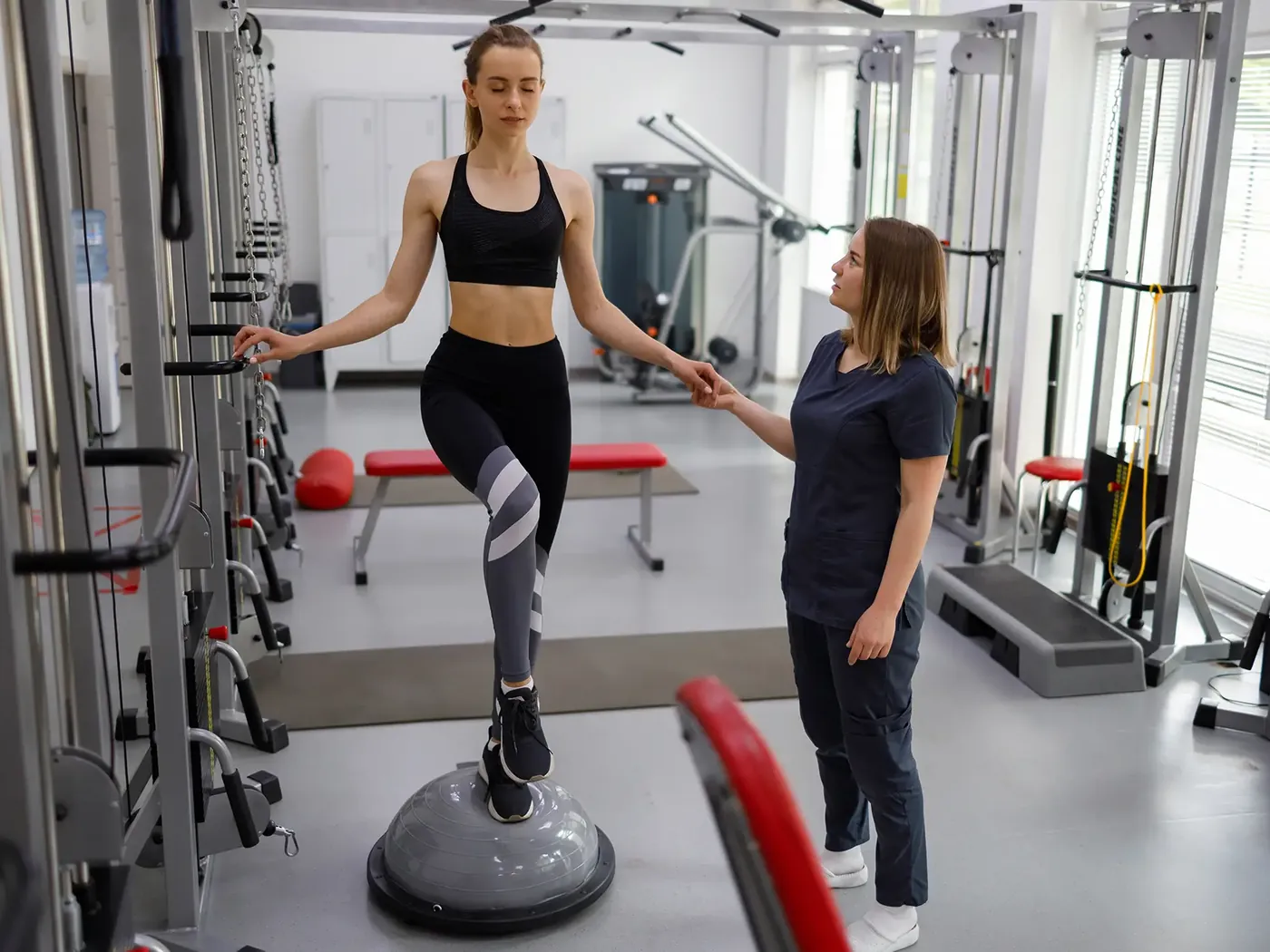
Ankle and hip mobility work restores the motion you need to correct yourself. Then standing balance is trained deliberately, with your eyes open and closed, on firm ground and soft, so every input gets used.
Weeks 6–10
Perform
Hips, thighs and calves get loaded, and stepping reactions get trained on purpose. Then real walking: turning, head turns, curbs, stairs, uneven ground, and holding a conversation while you do it.
Weeks 10+
Prevent
Balance holds when you keep using it, so you leave with a short program you will actually do and the places at home worth changing. That is the endpoint, not another standing appointment.
Questions, Answered
That fear is reasonable, and we work with it instead of against it. Balance work happens with something to hold and a clinician close enough to steady you, one-on-one with a licensed physical therapist. Nothing gets harder until you have earned it. Feeling a little wobbly on purpose, in a safe room, is how you stop feeling wobbly in your own kitchen.
Age is not a diagnosis. Hip and ankle strength, joint motion, stepping reactions and the inner ear’s share of the work all respond to training, at any age. What nobody can tell you from here is which one is your problem. That is what the evaluation answers. If what we find is medical rather than mechanical, we will say so and point you to the right person.
No. A device is something we assess, not something we assume. Sometimes the right cane at the right height makes you steadier the same day, and that is worth knowing. Usually the goal is to need less support, not more. If you already have a walker from a hospital stay, bring it in and let us check the fit, because a badly set one makes balance worse.
No physician referral is needed in Louisiana. Medicare and Medicaid are accepted here, along with plans like Blue Cross Blue Shield, Humana, TRICARE and Peoples Health, and the benefits check happens before your first visit and happens before your first visit. Bring your medication list too. Some prescriptions affect balance, and that belongs in the evaluation.
Say that out loud at the evaluation, because it changes the plan. True spinning, especially when it starts with a change of position, points toward the inner ear, and that has its own treatment. We offer vestibular therapy and balance therapy, and plenty of people need some of each.
Book Your Visit
Request a time and a real person calls you back. No phone tree. No ‘someone will reach out.’ Just a plan.
4.9 · 233+ Google reviews
A real person calls you back
Step 1 of 5
That’s the hard part done. We’ll call during business hours to lock in your time.
Visit Us